Antimicrobial Biomaterials
Antibiotic resistance and persistent infections continue to create an urgent need for new antimicrobial strategies that are effective, selective, and less prone to resistance. Our work in antimicrobial biomaterials focuses on how functional-group connectivity and geometry govern selective interactions with bacterial membranes.
In our initial studies, we demonstrated that a rigid connection of the CG functional group along the polymer backbone resulted in potent antimicrobial activity with bacterial-selective killing, highlighting the importance of structural constraints in membrane interactions.
In subsequent work, we showed that OCG-based materials induce enhanced membrane stress and elevated reactive oxygen species (ROS), revealing a distinct mechanistic pathway for antimicrobial activity linked to membrane perturbation.
Our current research aims to establish structure–function relationships that connect functional-group geometry with selective membrane interactions, enabling predictive design of next-generation antimicrobial biomaterials.
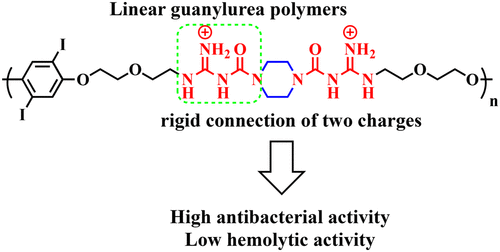
Bioconjugate Chem. (2018)
DOI: 10.1021/acs.bioconjchem.8b00057
© American Chemical Society, 2018.
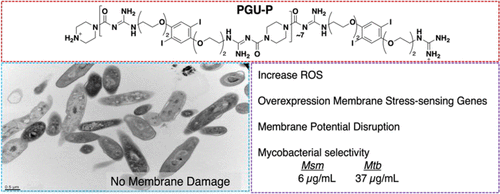
Biomacromolecules (2022)
DOI: 10.1021/acs.biomac.2c00902
© American Chemical Society, 2022.